
Hyper-Personalization as the Next Frontier in Customer Experience
Ever logged into a product and thought, “This feels made just for me”? That’s hyper-personalization in action.

Executive Summary (TL;DR)
Problem: SaaS products treat users as segments, not as people.
Learn:
Why hyper-personalization boosts retention and revenue.
How to build the data and AI backbone.
Tactical steps to roll out personalization without feeling creepy.
Who: Product leads, marketers, and C-suite execs in SaaS.
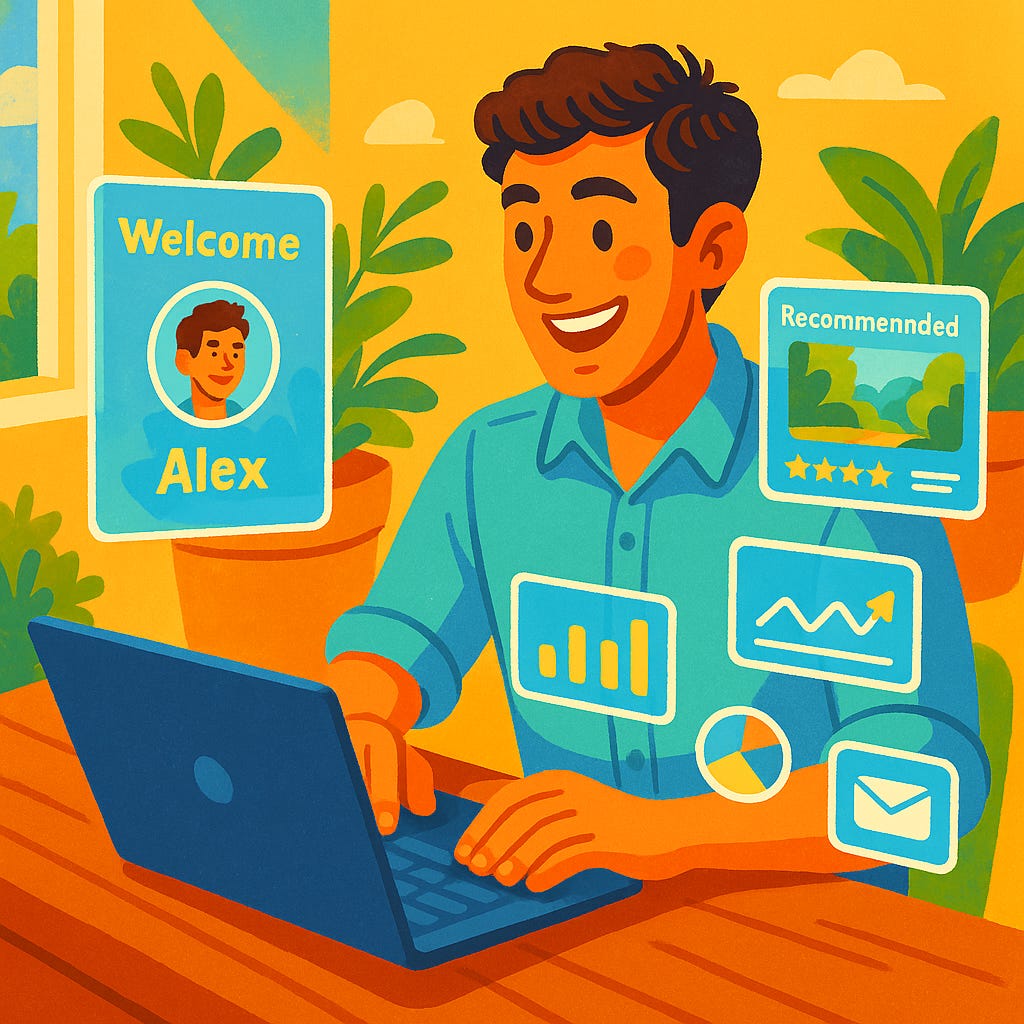
Ever logged into a product and thought, “This feels made just for me”? That’s hyper-personalization in action. Today’s customers expect more than one-size-fits-all. They want experiences that adapt in real time to their needs.
In SaaS, personalization used to mean slapping a name into an email. Now it’s about tailoring in-app flows, recommendations, and messaging at the individual level. Get this right, and you’ll see engagement climb, churn drop, and revenue grow.
Below, you’ll find the why, the how, and the next steps—all in a friendly, tactical guide.
Why Hyper-Personalization Matters Now
The Competitive Landscape
SaaS is crowded. There are thousands of apps in every niche. Users compare your UX to Netflix, Spotify, and Amazon. If your onboarding feels generic, they’ll churn before week two.
Business Impact Metrics
Take a mid-market CRM that added hyper-personalized onboarding. They mapped feature usage by role and triggered tips only when needed. Result: 25% lift in adoption and a 15% cut in churn.
Building the Foundation
Data Infrastructure
Event Streams: Pipe product events into a unified store—mix usage, CRM, and support data.
Real-Time Access: Use tools like Kafka or Snowflake’s Snowpipe. Data must flow fast and reliably.
AI & Analytics Layer
Model Choice: Start with simple rules for MVP. Then layer on ML models or a Retrieval-Augmented Generation (RAG) approach for context-aware suggestions.
Tools: CDPs (Customer Data Platforms), feature-flag services, and predictive scoring engines.
Tactical Rollout Steps
Quick Wins
Role-Based Onboarding: Show admins different tips than end users.
In-App Messages: Trigger a chat popup after a user hits a usage milestone or drops off.
Scaling to Full Hyper-Personalization
Orchestration Platforms: Adopt tools like Segment or mParticle to route data.
Micro-Segmentation: Divide users by tiny cohorts—think feature-usage patterns, not just job titles.
Sample Workflow
User abandons a key feature.
System flags the event.
Personalized tip sequence begins via email and in-app message.
Follow-up survey gauges satisfaction.
Data feeds back into model for better next-time targeting.
Balancing Personalization & Privacy
Guardrails & Ethical Design
Always ask for consent before collecting behavioral data.
Apply data minimization: only store what you need.
Avoiding the ‘Creep Factor’
If your product recommends a feature based on a private message or off-platform signal, you’ll feel invasive. Keep triggers transparent and let users opt out.
Measuring Success & Iterating
Key KPIs
Engagement: Daily/weekly active use.
Conversion Velocity: Time from signup to first key action.
Churn Delta: Difference in churn rate between personalized vs. control groups.
Feedback Loops
Embed NPS or quick CSAT prompts after personalized interactions. Feed responses back into your data layer.
Do This Tomorrow
Audit: List your top three user journeys and mark personalization gaps.
Pilot: Sketch a rule-based pilot—e.g., show a tip when a user triggers event X.
Align Teams: Get analytics and product on the same page with one quick-win metric.
What to Cut or Defer
Deep AI Theory: Stick to practical models.
Consumer Cases: Focus on B2B/SaaS examples.
Vendor Rundown: Highlight only 2–3 tools you’ll actually use.
Ready to roll? Let’s personalize your product and treat every user like a VIP.